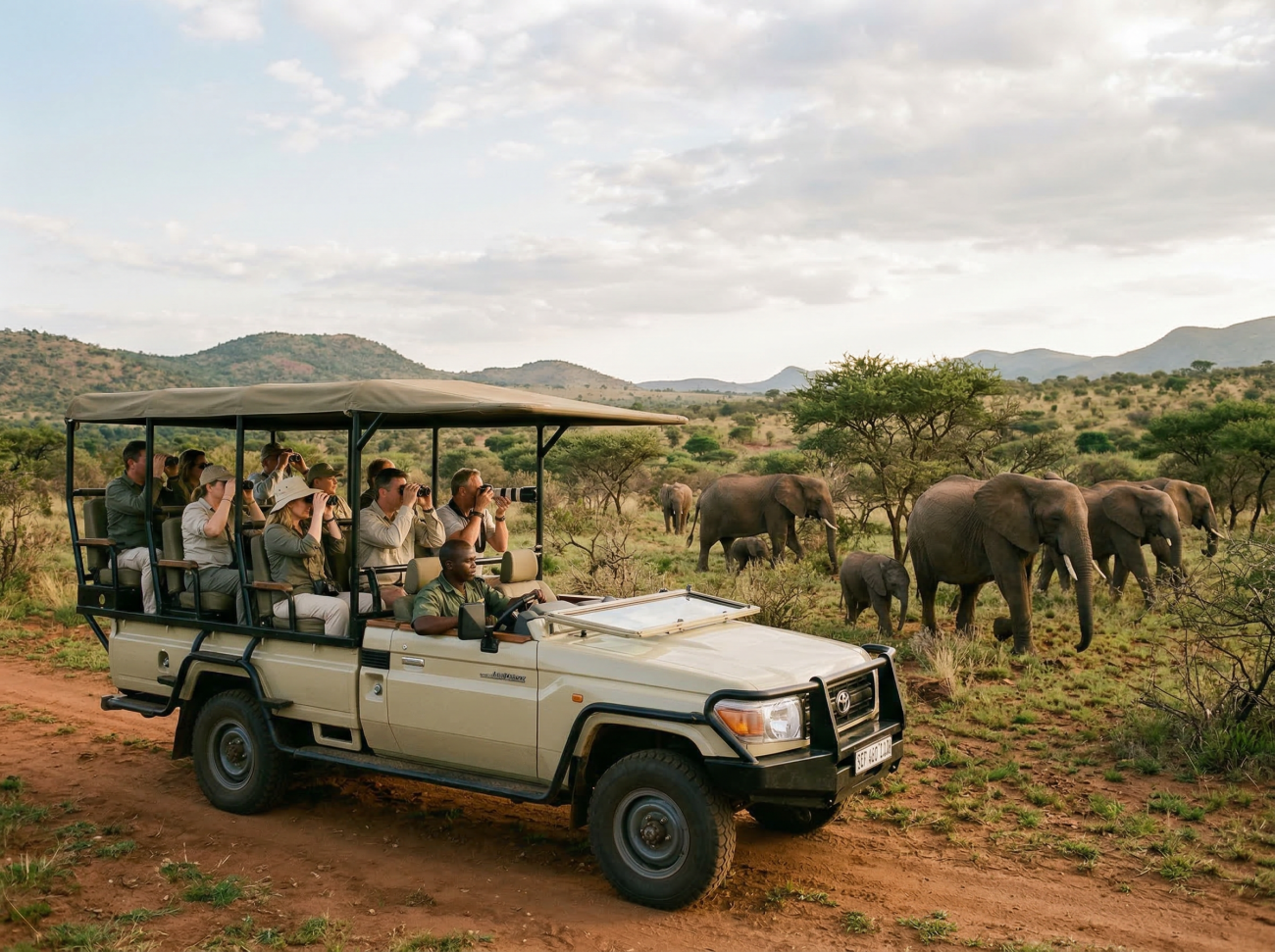
Few travel experiences rival the quiet thrill of spotting wildlife in its natural environment. A full-day open-vehicle safari in Pilanesberg offers exactly that: an immersive journey through one of South Africa’s most accessible wildlife reserves. Just a few hours from Johannesburg, the park sits inside the crater of an ancient volcano and hosts an extraordinary diversity of animals and landscapes.
Unlike zoo-style encounters or staged wildlife tours, a safari in Pilanesberg is about patience and observation. Guides track movement across the savanna, scanning the horizon for subtle clues – a rustle in tall grass, a distant call, or the shadow of a herd crossing the plains. The open vehicle places you at eye level with the environment, allowing unobstructed views of animals moving freely across their territory.
This guide explains what the full-day safari experience feels like, who it suits best, and how to plan your trip so it becomes a highlight of your South Africa adventure.
What the Full-Day Safari Includes
A typical full-day Pilanesberg safari involves early morning departure, guided wildlife drives, and time spent exploring the park’s diverse habitats.
Most tours include:
- Hotel pickup from Johannesburg or nearby areas
- Transport to Pilanesberg National Park
- Open-vehicle game drives with experienced guides
- Wildlife spotting opportunities throughout the day
- Lunch or refreshments at a lodge or rest camp
- Return transport in the evening
The park itself spans more than 570 km² and lies within a dramatic volcanic landscape, making it one of South Africa’s largest wildlife reserves.
Because the safari lasts the entire day, it provides significantly better wildlife viewing opportunities compared to short drives.
Who This Experience Is Best For
First-time safari travelers
Pilanesberg offers an accessible introduction to African wildlife.
Wildlife enthusiasts
The reserve hosts thousands of animals and hundreds of bird species.
Photographers
Open vehicles provide excellent vantage points for wildlife photography.
Families and couples
The park is malaria-free, making it a popular safari destination for families.
It’s a balanced safari exciting enough for adventure seekers but comfortable for beginners.
Timing, Duration & Practical Logistics
Total duration: approximately 10–12 hours
Departure: early morning (often around 6:00 AM)
Location: Pilanesberg National Park, North West Province
Distance from Johannesburg: roughly 2–3 hours by road
Early departures maximize wildlife sightings because animals are most active during cooler morning and late afternoon hours.
Bring sunscreen, a hat, binoculars, and a camera with zoom lens.
What Wildlife You Might See
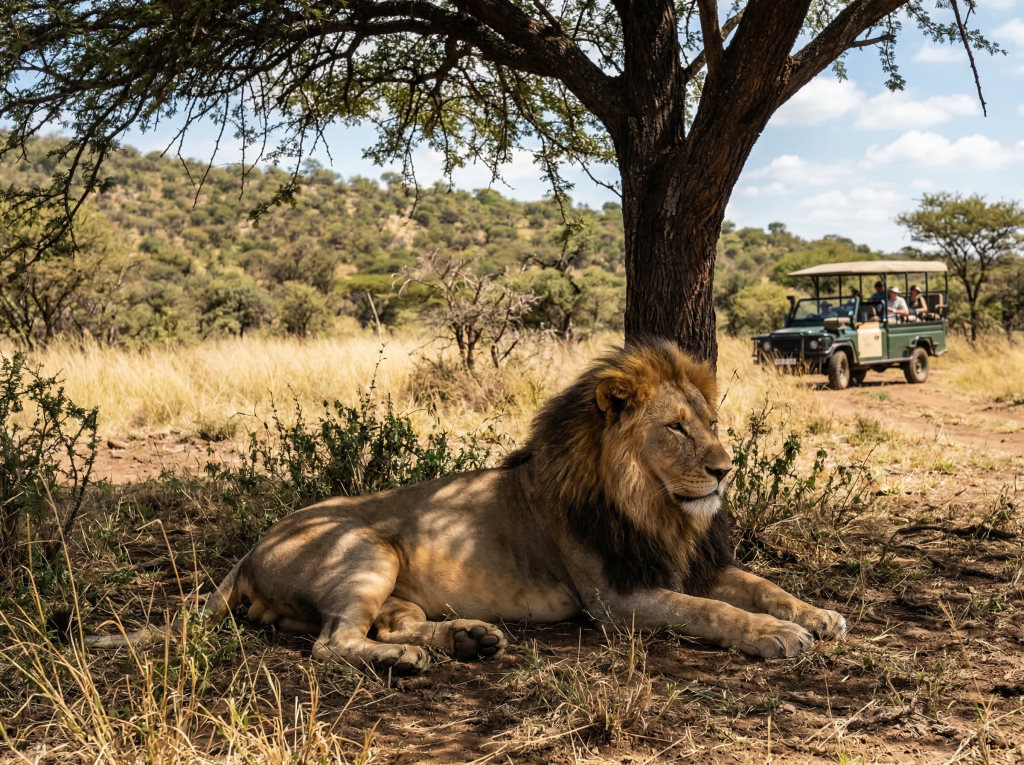
Pilanesberg is famous for hosting Africa’s Big Five like lion, leopard, rhinoceros, elephant, and Cape buffalo along with many other species.
Common sightings include:
- Elephants crossing dusty tracks
- Rhinos grazing quietly
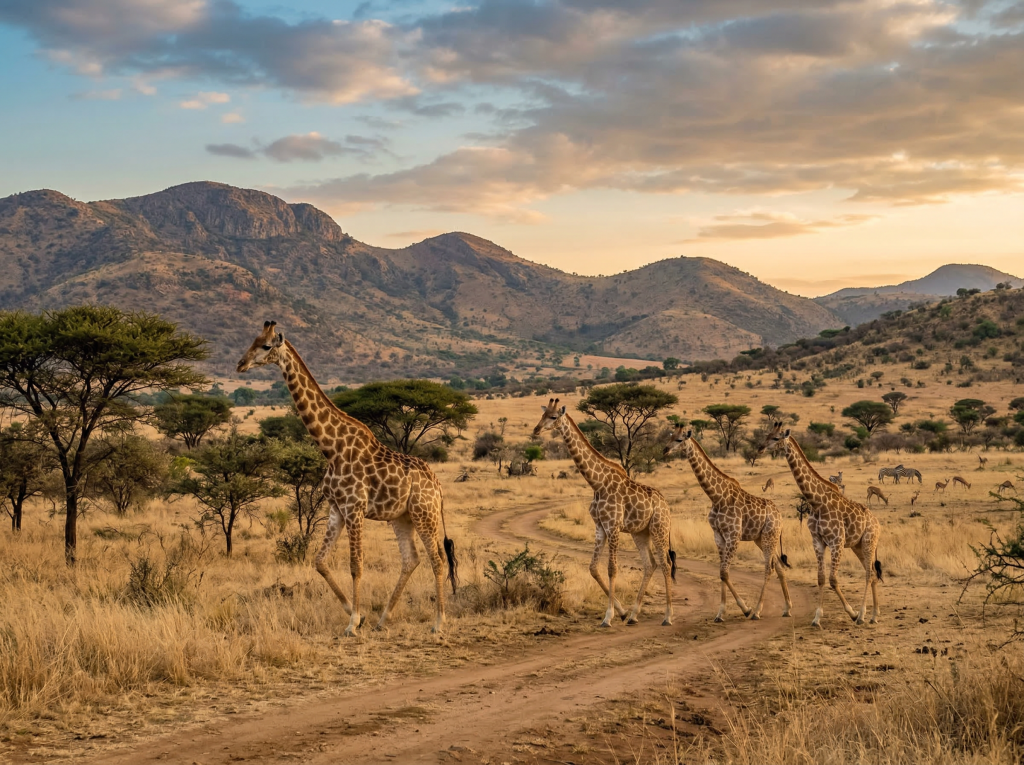
- Giraffes stretching above acacia trees
- Zebras and antelope grazing in herds
- Hippos resting near watering holes
- Predators such as lions or cheetahs
The reserve is also home to more than 360 bird species, making it a rewarding destination for birdwatchers.
Because wildlife moves freely, every safari feels unique.
The Experience of an Open Safari Vehicle
One of the defining aspects of this safari is the vehicle itself. Instead of a closed van, guests travel in an open 4×4 vehicle designed specifically for wildlife viewing.
Benefits include:
- Elevated seating for better visibility
- Unobstructed photography angles
- Close connection with the environment
- Guides able to stop and interpret animal behavior
Open vehicles enhance the sense of immersion. You smell the vegetation, hear birds calling, and feel the breeze moving across the plains.
The Rhythm of the Day
A full-day safari typically unfolds in stages.
Morning:
Your guide leads the first game drive when animals are most active.
Midday:
A rest break or lunch stop at a lodge or scenic waterhole.
Afternoon:
Another drive in search of wildlife as temperatures begin to drop.
This rhythm mirrors the natural activity patterns of animals.
Tips to Make the Safari Better
– Wear neutral-colored clothing
– Bring binoculars for distant sightings
– Keep movements quiet near animals
– Listen carefully to the guide’s instructions
– Stay patient as sightings often happen suddenly
Safari success often depends on timing and observation.
Pros & Cons
Pros
- Opportunity to see Africa’s Big Five
- Experienced wildlife guides
- Stunning volcanic landscape
- Malaria-free safari destination
- Easy access from major cities
Cons
- Wildlife sightings cannot be guaranteed
- Early start required
- Long travel day from Johannesburg
Still, the reward often outweighs the effort.
Why Pilanesberg Safaris Feel Special
Pilanesberg offers a rare blend of accessibility and wilderness. Unlike remote safari parks that require long flights or multi-day expeditions, this reserve provides a true African wildlife experience within a few hours of major cities. Its unique location in a volcanic crater also creates a remarkable mix of ecosystems, where animals from different habitats coexist within one reserve.
The result is a landscape that feels both dramatic and alive where every bend in the road could reveal a herd of elephants or a lion resting beneath a tree.
Frequently Asked Questions
1. Is Pilanesberg National Park worth visiting for a safari?
Yes, Pilanesberg National Park is one of the best safari destinations near Johannesburg, offering Big Five wildlife sightings in a malaria-free reserve.
2. How long is a full-day Pilanesberg safari?
A full-day safari typically lasts 10–12 hours, including travel from Johannesburg, morning and afternoon game drives, and lunch breaks.
3. Can you see the Big Five in Pilanesberg National Park?
Yes. Pilanesberg is home to the Big Five — lion, leopard, elephant, rhinoceros, and Cape buffalo — along with many other wildlife species.
4. How far is Pilanesberg from Johannesburg?
Pilanesberg National Park is about 2–3 hours by road from Johannesburg, making it one of the most accessible safari destinations in South Africa.
5. What animals can you see on a Pilanesberg safari?
Common sightings include elephants, giraffes, zebras, antelope, hippos, rhinos, and sometimes predators like lions and cheetahs.
6. Is Pilanesberg safari suitable for beginners?
Yes, Pilanesberg is an excellent safari destination for first-time visitors because it’s easy to reach and offers guided wildlife tours.
7. What should I wear on a Pilanesberg safari?
Wear neutral-colored clothing, comfortable shoes, sunglasses, and a hat to stay comfortable during the game drives.
8. Are open-vehicle safaris safe?
Yes. Experienced guides follow strict safety protocols, and visitors remain inside the vehicle while observing wildlife.
9. What is the best time for a safari in Pilanesberg?
Early morning and late afternoon drives offer the best wildlife sightings because animals are more active during cooler hours.
10. Do I need binoculars for a safari?
While not mandatory, binoculars enhance your safari experience by helping you observe distant wildlife and birds.
A full-day open-vehicle safari in Pilanesberg is one of the best ways to experience African wildlife without venturing deep into remote wilderness. It offers a balanced combination of comfort, adventure, and authentic nature encounters.
For travelers visiting South Africa whether first-timers or seasoned explorers as this safari delivers something rare: a genuine moment of connection with the wild.
And sometimes, that moment happens when the vehicle falls silent, a herd appears in the distance, and the vast African landscape suddenly feels very close.
Related Articles
- Marina Bay Sands Hotel Review: A Comprehensive Experience
- Inside a Ritz-Carlton Club Lounge: Is It Worth Paying for Access?
- Inside the New British Airways Lounge at Miami International Airport
Disclaimer
This article is based on travel research, publicly available information, and insights from frequent travellers. All recommendations are for informational purposes only. Travelers should verify details such as opening hours, transport schedules, and safety guidelines before planning their visit. The author cannot be held responsible for any changes or incidents that may occur during your travel.