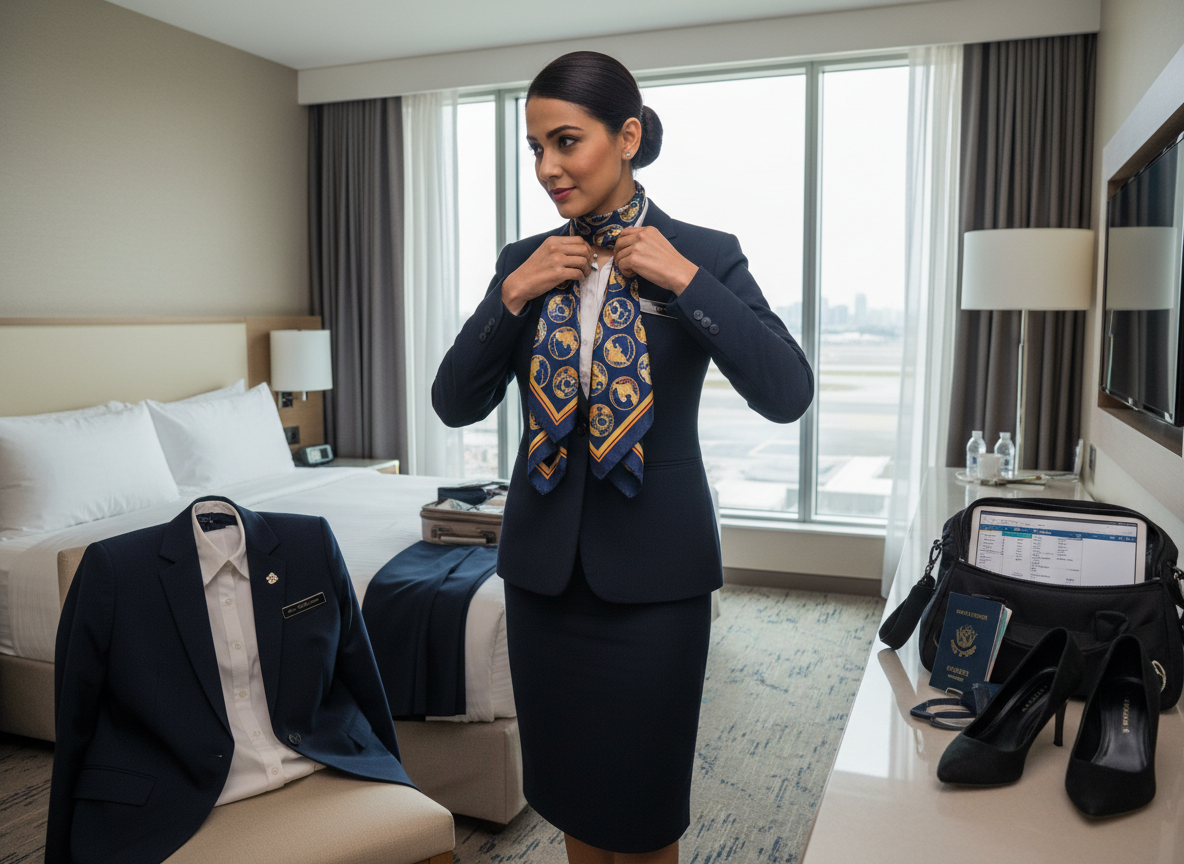
When most of us think about long-haul flights, we picture comfortable seats, warm meals, and maybe a glass of champagne somewhere above the clouds. What we rarely think about is the preparation happening long before boarding begins.
Behind every calm smile at 35,000 feet is a carefully managed routine. International cabin crew don’t simply show up at the airport and step into service mode. For long-haul operations, preparation begins hours sometimes days before departure.
Here’s a closer look at how professional cabin crew prepare for ultra-long journeys across time zones.

1. Adjusting Sleep Before the Flight
Long-haul flying disrupts the body clock. Experienced crew don’t wait until landing to deal with jet lag they prepare in advance.
If the destination is significantly ahead or behind their home base time zone, many begin adjusting sleep patterns 24–48 hours earlier. That may mean going to bed earlier than usual or shifting meal timing.
Fatigue management in aviation is serious. A well-rested crew member is not just about service quality it’s about safety.
2. Hydration Starts Early
Cabin air is extremely dry. After 10+ hours, dehydration becomes noticeable.
Professional crew increase water intake well before reporting for duty. They often reduce caffeine and avoid alcohol entirely before long-haul assignments. Some also focus on electrolyte balance and lighter meals to avoid feeling sluggish in-flight.
It’s preparation most passengers never see, but it makes a difference by hour twelve.
3. Grooming and Uniform Precision
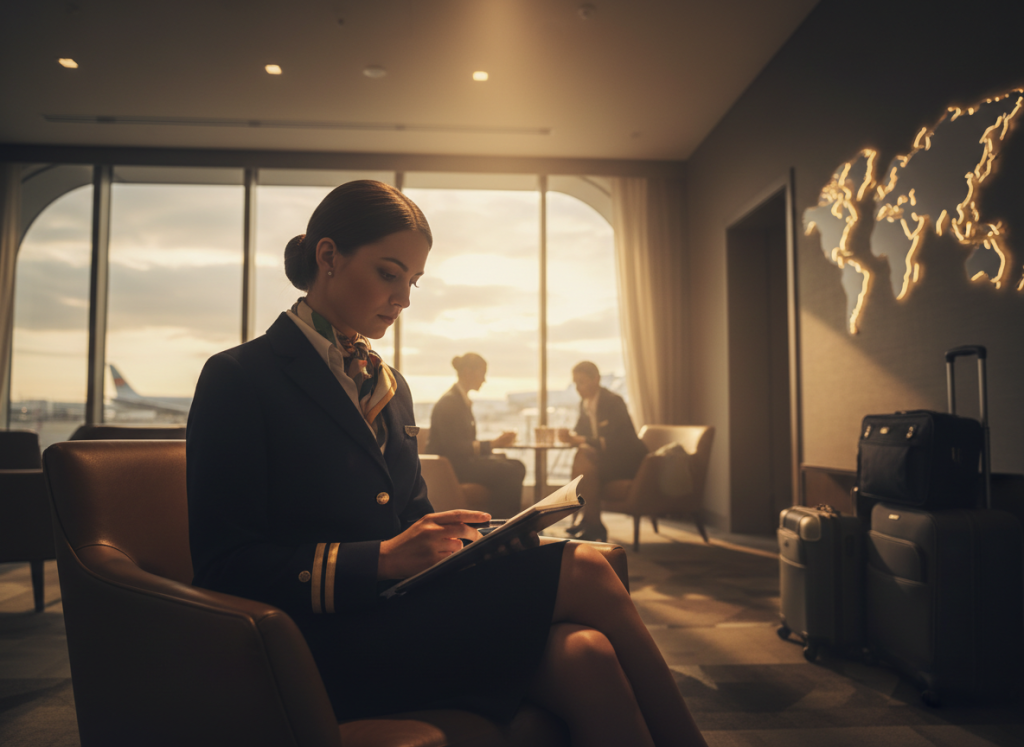
Long-haul flights demand endurance and presentation standards don’t relax halfway through.
Uniforms are inspected, pressed, and carefully arranged. Shoes are polished. Hair is styled to stay secure throughout a long shift. Makeup is applied strategically to withstand cabin lighting and dry air.
This isn’t vanity. Presentation builds authority and reassurance. Passengers subconsciously associate polished appearance with professionalism.
4. Mental Readiness for Service
Long-haul flying tests patience and emotional stamina.
Crew mentally prepare for:
- Diverse passenger personalities
- Cultural differences
- Unexpected turbulence
- Medical situations
- Demanding premium-cabin expectations
Many adopt small rituals before leaving home quiet reflection, light stretching, or simply a few moments of stillness. The goal is composure.
Because once boarding begins, there is no pause button.
5. Packing for Efficiency
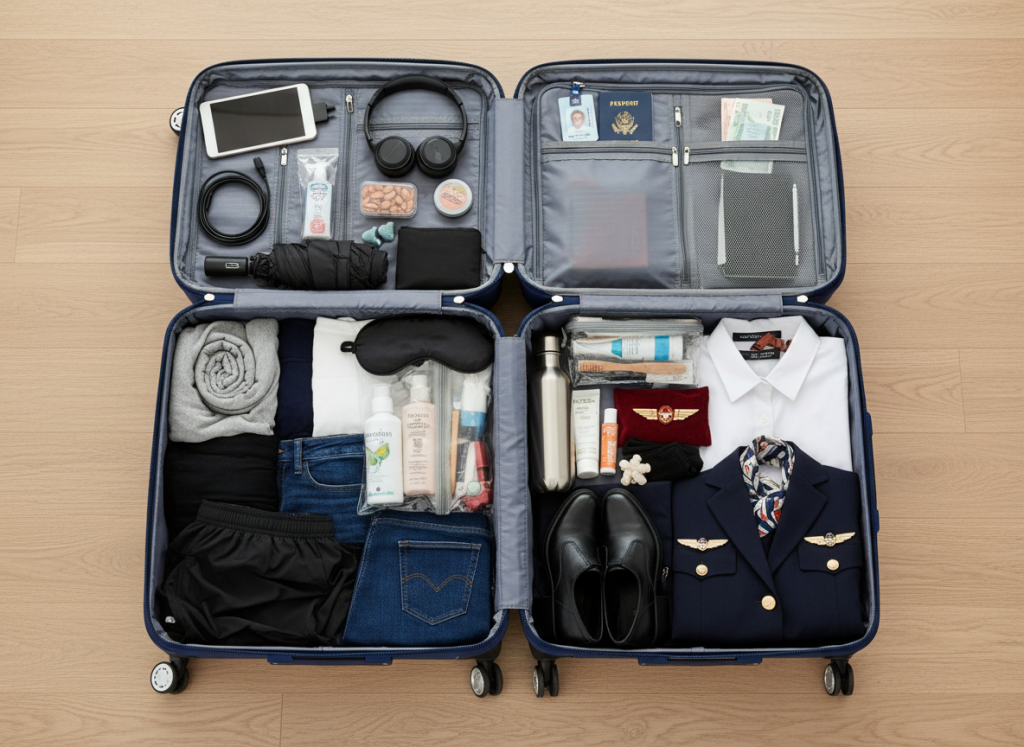
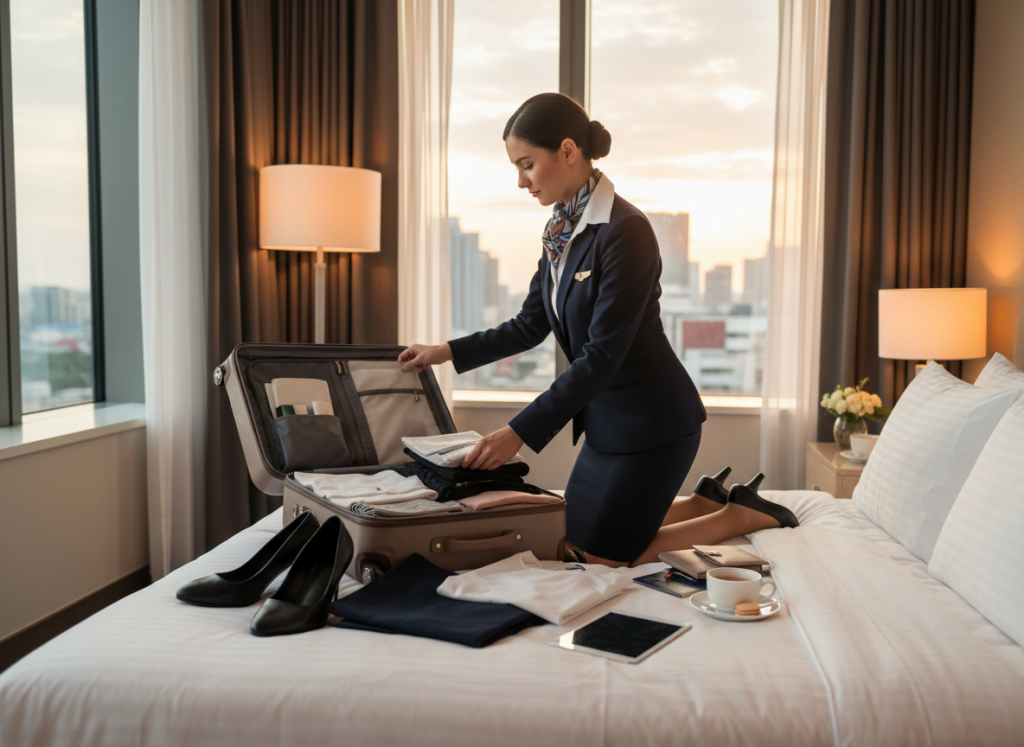
Cabin crew packing is strategic.
For long-haul trips, bags often include:
- Skincare products for dry air
- Compression stockings
- Healthy snacks
- Backup grooming essentials
- Comfortable layover clothing
- Workout attire
Layovers may look glamorous on social media, but in reality, most crew prioritize sleep and recovery over sightseeing.
Efficiency is key. Many seasoned crew can pack in under 20 minutes.
6. Pre-Flight Briefing Preparation
Before passengers arrive, crew attend a structured briefing session.
They review:
- Passenger load
- Special meal requests
- VIP travelers
- Safety responsibilities
- Emergency procedures
- Rest rotation schedules
Each crew member has a defined role. On long-haul flights, teamwork is choreography.
7. Managing Energy During the Flight
Ultra-long-haul operations require controlled stamina.
Crew rotate rest periods in designated crew-rest compartments. They eat lightly, stretch when possible, and carefully time caffeine intake.
Energy is conserved where possible, especially during cruise phases.
By the time passengers are waking up for breakfast service, crew may already be 10 hours into duty.
8. Skin and Health Protection
Long hours in pressurized cabins affect skin, circulation, and hydration.
Many experienced crew follow skincare routines tailored to high-altitude conditions. Moisturizers, hydrating mists, and minimal heavy makeup help reduce fatigue appearance.
Physical health is part of professional image.
9. Cultural Awareness Preparation
International routes mean global passengers.
Crew often review destination-specific cultural norms especially when flying to regions with particular etiquette expectations.
Understanding small details such as greeting customs or meal sensitivities enhances service delivery and avoids misunderstandings.
10. Layover Discipline
After landing, discipline continues.
While social media often shows scenic hotel views and city skylines, most long-haul crew:
- Sleep first
- Limit late-night outings
- Hydrate consistently
- Avoid heavy alcohol
- Prepare uniform for return duty
The glamorous perception of crew life often overlooks the professional discipline behind it.
Why This Preparation Matters for Luxury Travelers
In premium cabins, expectations are high.
Passengers expect:
- Calm confidence
- Attentive timing
- Composed problem-solving
- Discreet efficiency
All of that begins before the flight ever departs.
The seamless luxury experience many travelers enjoy is built on structured preparation, fatigue science, and personal discipline.
Frequently Asked Questions
How early do cabin crew prepare before a long-haul flight?
Most begin adjusting sleep and hydration at least 24 hours before departure.
Do cabin crew sleep during long-haul flights?
Yes. On long-haul and ultra-long-haul routes, regulated rest periods are scheduled in designated crew-rest areas.
Is grooming mandatory?
Yes. Airlines maintain strict presentation standards to ensure consistent professional appearance.
Do cabin crew explore cities during layovers?
Sometimes — but rest usually takes priority, especially on short layovers or quick turnarounds.
How do cabin crew manage jet lag?
Through sleep discipline, hydration, strategic napping, light exercise, and experience.
Are long-haul flights harder than short-haul?
Physically, yes. They require more stamina, planning, and energy management.
Do crew prepare differently for business and first-class service?
Premium cabin service often requires more detailed preparation due to personalized expectations.
The next time you board a long-haul flight and are greeted by composed, polished professionals, remember that their workday didn’t begin at the aircraft door.
It began with preparation like physical, mental, and logistical.
Luxury travel in the sky isn’t just about seats and menus. It’s about people who prepare meticulously to deliver calm consistency across continents.
Related Articles
- Etihad Airways A380 First Class Apartment Review: London to Abu Dhabi
- Dubai International Airport (DXB) Guide: What Every Traveler Needs to Know
- Hong Kong International Airport – Traveller’s Guide
Disclaimer
This article is based on travel research, publicly available information, personal travel experience, and insights from frequent travellers. All recommendations are for informational purposes only. Travelers should verify details such as opening hours, transport schedules, and safety guidelines before planning their visit. The author cannot be held responsible for any changes or incidents that may occur during your travel.