Luxury travelers often obsess over airline cabins, airport lounges, and suite upgrades yet one of the most underrated premium experiences happens quietly inside certain hotels. The Ritz-Carlton Club Lounge is not just a perk; it’s an alternative universe within the hotel itself. For layover travelers, business flyers, and anyone who values calm over chaos, it can reshape how a trip feels from the moment you check in.
But access is expensive. Sometimes very expensive.
So, the real question is not whether it’s luxurious, but it is. The question is whether it’s worth paying for, especially if you’re booking it deliberately rather than receiving it as a complimentary upgrade.
Here’s what actually happens behind the doors.
What a Ritz-Carlton Club Lounge really is
Ritz-Carlton Club Lounges are available in most major Ritz-Carlton properties worldwide, though availability varies by hotel and should always be confirmed at booking.
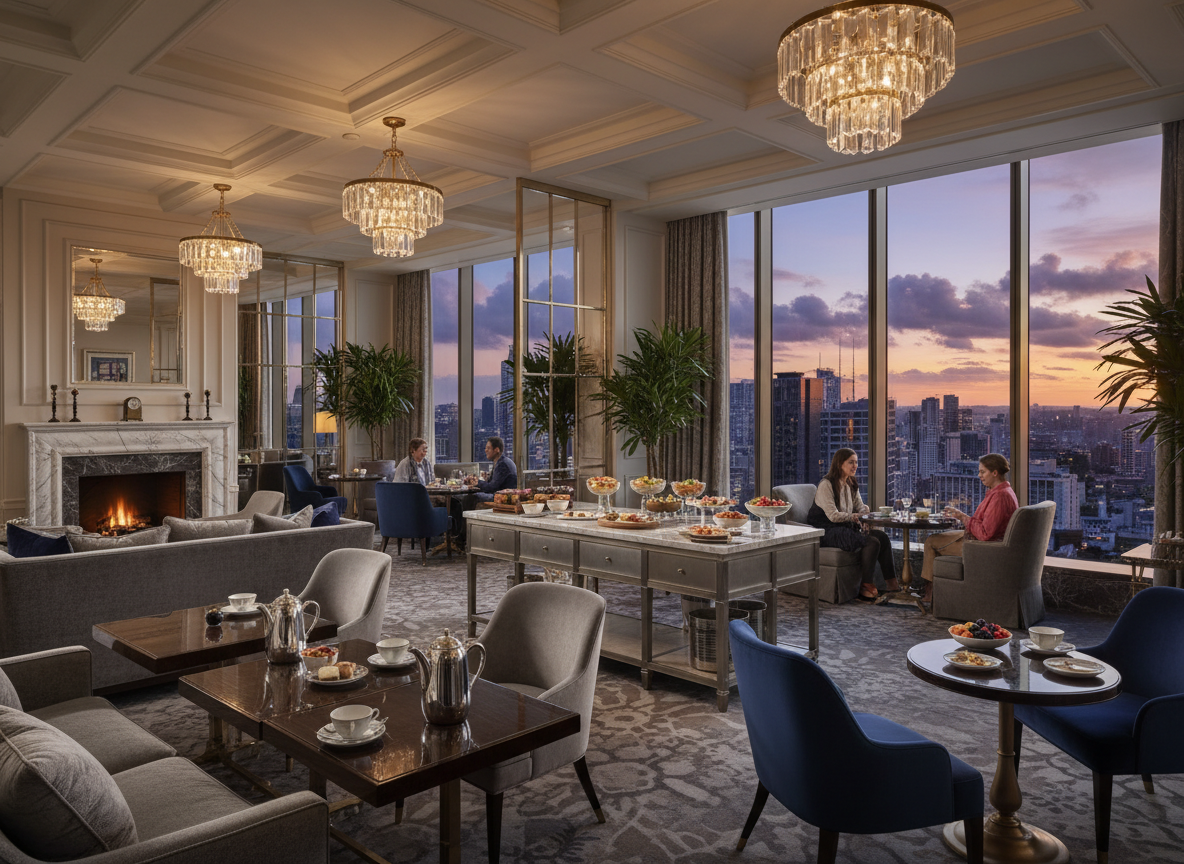
The Ritz-Carlton Club Lounges are private, elevated floors or dedicated spaces reserved exclusively for guests who book Club Level rooms or purchase access. Think of it as a boutique hotel hidden inside a larger luxury property. Entry is controlled by keycard, staff recognize returning guests by name, and the atmosphere is intentionally quiet almost residential.
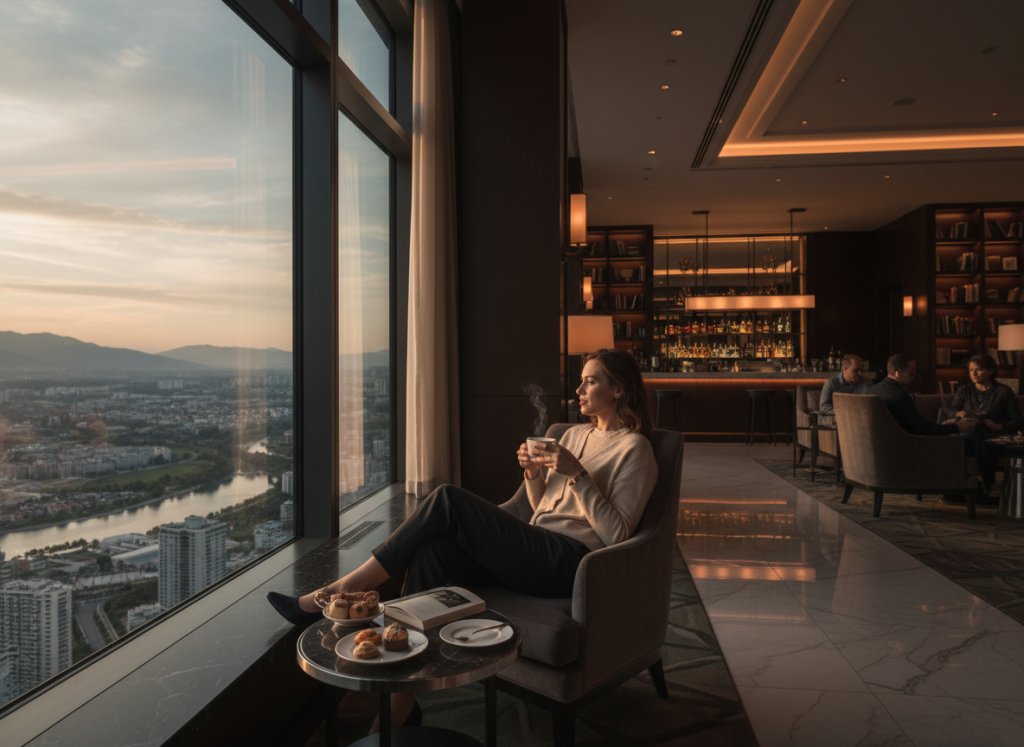
Unlike airline lounges that function as transit zones, the Club Lounge is meant to feel like a private members’ salon. Guests drift in throughout the day, not in a rush, but to settle in. Some work. Some read. Some simply sit with a drink and watch the city skyline through floor-to-ceiling glass.
The design philosophy is intentional: warm lighting, plush seating clusters, curated art, and service that feels personal rather than transactional.
You’re not escaping an airport. You’re stepping into a slower rhythm.
The five daily culinary presentations
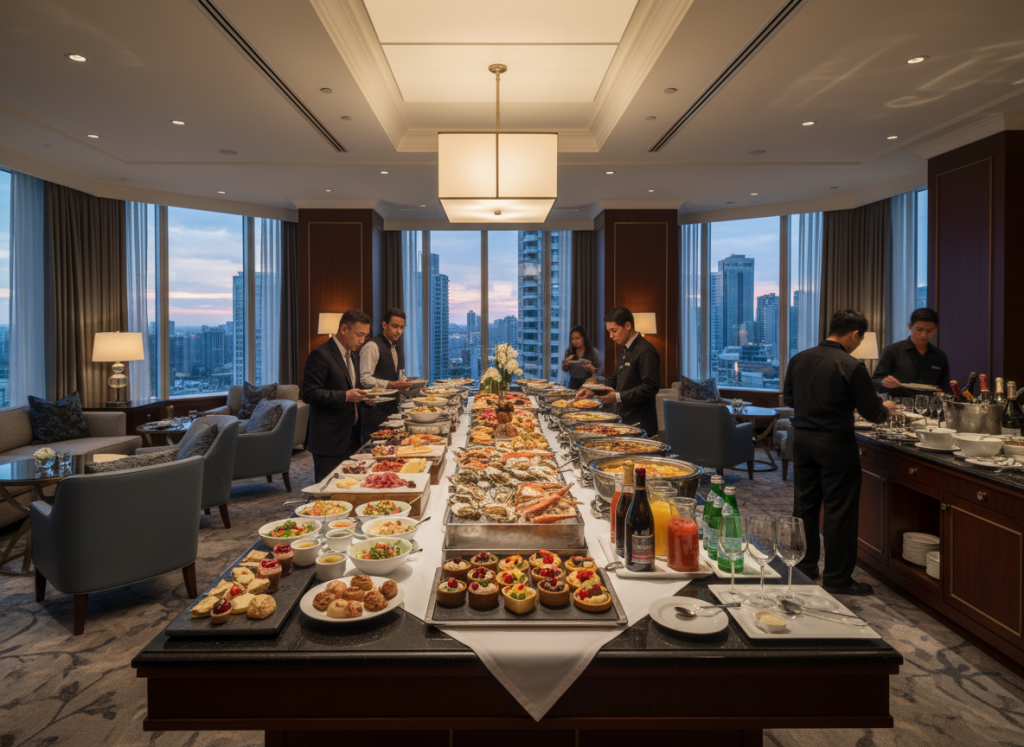
The defining feature of a Ritz-Carlton Club Lounge is the structured food program. Most properties operate on a five-presentation schedule that runs like clockwork:
Breakfast which is full hot and cold spread
Midday light lunch filled with small plates and salads
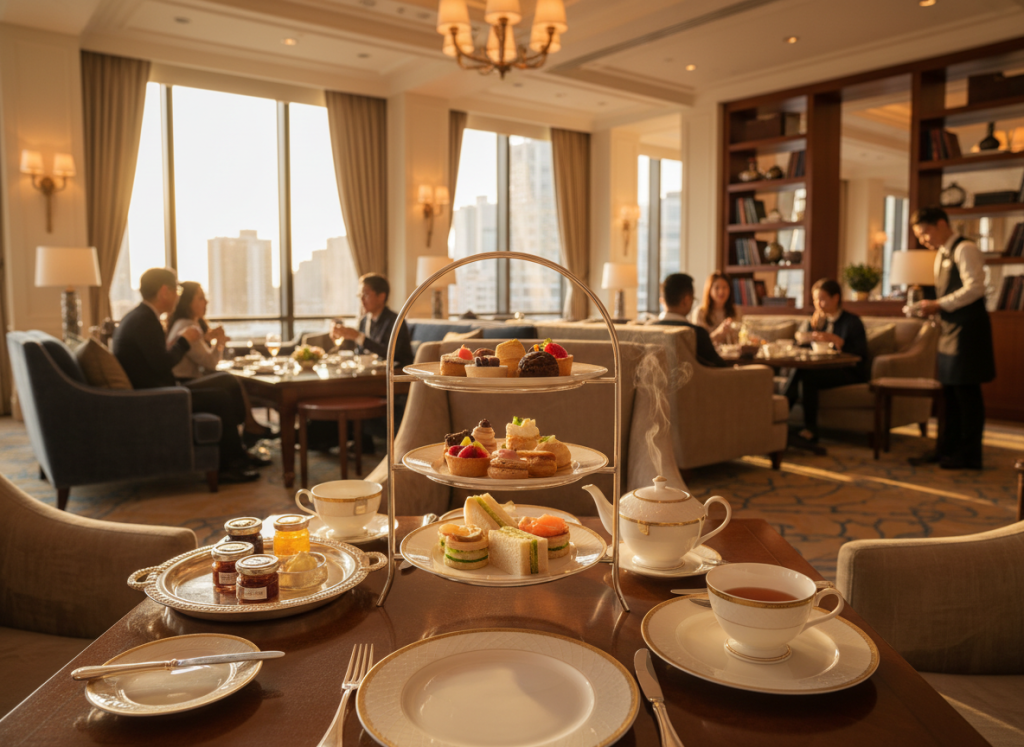
Afternoon tea with pastries, desserts, and specialty teas
Hors d’oeuvres with evening canapés that often substitute dinner
Dessert & cordials like sweets, chocolates, and premium spirits
This is not snack food. At stronger properties, chefs treat the lounge menu as a showcase. You’ll often see regional cuisine represented like tapas in Spain, seafood in coastal cities, Asian small plates in major hubs. Portions are elegant rather than oversized, but the cumulative effect is generous enough that many guests skip restaurant dining entirely.
For layover travelers or short business trips, this matters. The lounge can effectively replace room service, restaurants, and even airport meals.
That convenience has a monetary value.
Beverage service: a quiet luxury signal
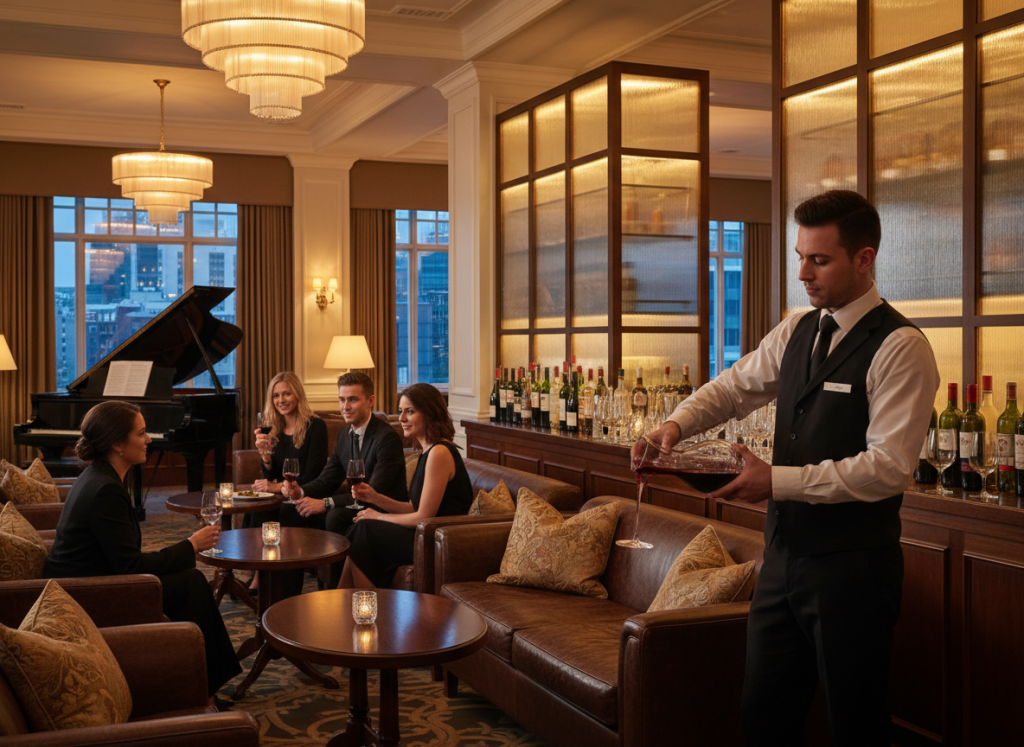
Alcohol policy varies by region, but most Club Lounges offer complimentary wine, beer, and premium spirits during evening hours. Some locations elevate the experience with cocktail service, curated wine lists, or sommelier-selected pours.
During the day, espresso machines, specialty teas, and soft drinks remain available continuously. The psychological impact is subtle but powerful: you never feel the need to “go buy something.” Everything you need is already there.
That sense of abundance is part of what guests are paying for.
Service style: invisible but attentive
The difference between a good lounge and a great lounge is staff behavior.
Club Lounge attendants operate closer to private concierge standards than typical hotel staffing. They learn guest preferences quickly especially how you take your coffee, which corner seat you prefer, whether you’re working or relaxing. Service becomes anticipatory rather than reactive.
You’re rarely interrupted, but help appears instantly when needed. It’s the hospitality equivalent of noise-cancelling headphones: presence without intrusion.
For frequent travelers accustomed to friction like queues, bills, tipping moments – all this frictionless environment feels unusually calm.
The productivity advantage
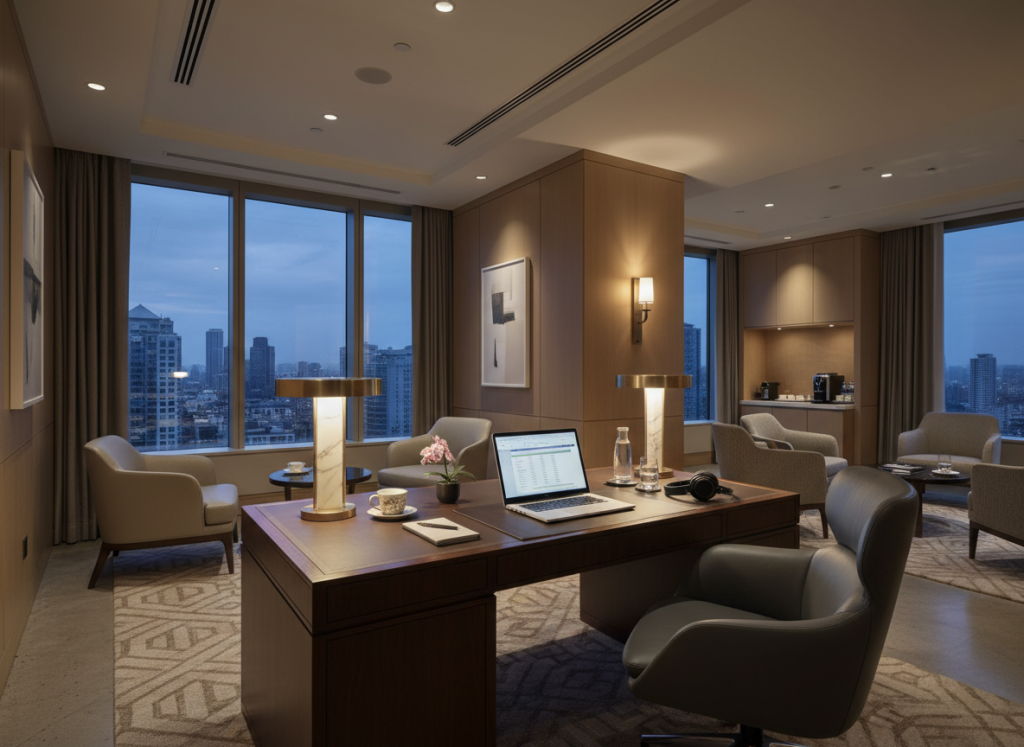
For business travelers, the lounge functions as a hybrid office and retreat. Reliable Wi-Fi, discreet workspaces, and quiet acoustics create a productive environment that most hotel lobbies cannot match.
Many guests use the lounge as their primary workspace during short stays. It eliminates the need for coworking rentals or crowded cafés. Meetings can happen discreetly. Calls can be taken without background chaos.
This is especially relevant for long layovers where booking a Club Level airport hotel becomes a smarter alternative to fighting for airport lounge seating.
Privacy and psychological comfort
There’s a reason seasoned travelers seek private spaces: travel fatigue is real. Airports and cities overload the senses. The Club Lounge acts as a decompression chamber between movement and rest.
Because access is limited, occupancy rarely feels chaotic. Even at full capacity, sound levels remain controlled. Lighting is warm. Staff discourage disruptive behavior subtly but effectively.
You don’t just consume amenities but you recover energy.
For travelers on multi-segment journeys, this recovery window can influence how the next flight feels.
The hidden economics of Club Lounge access
Here’s the practical side: Club Level rooms often cost $100–$250 more per night than standard rooms, depending on location and season.
On paper, that sounds steep.
But consider what the lounge replaces:
- Breakfast for two at a luxury hotel restaurant
- Afternoon café stops
- Pre-dinner drinks
- Evening dining
- Snacks and bottled water
- Workspace rentals or business lounges
In major cities, those expenses can easily exceed the Club surcharge. For couples or business travelers expensing meals, the math shifts quickly.
The lounge becomes less about indulgence and more about cost consolidation.
When it’s absolutely worth it
Club access delivers maximum value in specific scenarios:
- Short stays where convenience outweighs exploration
- Business travel requiring quiet workspace
- Long layovers between flights
- Expensive dining cities (Tokyo, New York, London)
- Trips focused on rest rather than nightlife
- Travelers who value privacy over social spaces
If your itinerary revolves around being outside the hotel all day, you may underuse the lounge. But for trips built around recovery, productivity, or calm especially it becomes central to the experience.
When it might not be worth paying for
There are cases where Club access is unnecessary:
- One-night airport stays with early departures
- Cities known for street food or local dining exploration
- Travelers who rarely spend time in hotels
- Ultra-short layovers
- Guests who don’t consume lounge dining or beverages
The value depends entirely on usage. Buying access and ignoring it is wasted money. Using it fully turns it into a strategic upgrade.
Practical tips for maximizing Club Lounge access
- Arrive early on check-in day as access often starts immediately.
- Use the lounge instead of ordering room service.
- Ask staff about off-menu specialties or regional items.
- Schedule calls during quieter midday windows.
- Use afternoon tea as a reset before evening outings.
- Confirm alcohol service hours as they vary globally.
- Sit near windows for natural light and lower fatigue.
- Pack light snacks from the lounge for early flights (where permitted).
- Build your daily schedule around presentation times.
- Tip discreetly if service exceeds expectations.
Frequently Asked Questions
1. Can anyone buy Ritz-Carlton Club Lounge access?
Only guests booking Club Level rooms or approved upgrades can enter; walk-in access is not typically sold.
2. Does Marriott elite status guarantee entry?
Elite status alone does not guarantee Club Lounge access at Ritz-Carlton properties.
3. Are meals sufficient to replace restaurant dining?
For many travelers, yes — especially the evening presentation.
4. Are children allowed in the lounge?
Yes, though quiet etiquette is expected.
5. Is alcohol complimentary?
Evening alcohol service is usually included, but policies vary by country.
6. Can guests bring companions?
Only registered Club Level guests may enter unless otherwise approved.
7. Is there a dress code?
Smart casual is encouraged; swimwear and gym attire are discouraged.
8. Are take-away items allowed?
Small items are generally tolerated, but large removals are frowned upon.
9. Is Wi-Fi faster in the lounge?
Often yes — lounges prioritize stable connectivity.
10. Do all Ritz-Carlton hotels have Club Lounges?
Most major properties do, but always confirm before booking.
The Ritz-Carlton Club Lounge is less about luxury theater and more about controlled comfort. It removes friction from travel. Meals are handled. Drinks are handled. Workspace is handled. Quiet is guaranteed. For travelers who understand the fatigue curve of modern flying, that stability is worth more than marble lobbies or oversized suites.
It’s not necessary for every trip. But when aligned with the right itinerary, it transforms a hotel stay into something closer to a private residence which is predictable, calm, and restorative. That’s why seasoned travelers keep coming back.
For travelers who treat hotels as part of the journey rather than a place to sleep, Club access isn’t just an upgrade however it’s a strategy. And when used deliberately, it becomes one of the most reliable ways to turn a hectic trip into a controlled, enjoyable one.
Related Articles
- Inside the Louis Vuitton Lounge at Doha Airport: Where Luxury Meets Fine Dining
- Singapore Airlines Lounges at Changi Airport: Private Room, SilverKris & KrisFlyer Gold
- Exploring Lounge Access at Suvarnabhumi Airport, Bangkok
Disclaimer
This article is based on travel research, publicly available information, personal travel experience, and insights from frequent travellers. All recommendations are for informational purposes only. Travelers should verify details such as opening hours, transport schedules, and safety guidelines before planning their visit. The author cannot be held responsible for any changes or incidents that may occur during your travel.